





A Practical 2026 Guide
Choosing the right walling material is one of the most important decisions in any construction project. It impacts structural strength, construction speed, cost, energy efficiency, and long-term sustainability.
For decades, red clay bricks have been the default choice across India. But in recent years, AAC blocks (Autoclaved Aerated Concrete blocks) have gained popularity as a lighter, faster, and more eco-friendly alternative.
If you’re planning a home, apartment, or commercial building and wondering “AAC blocks or red bricks—which should I use?”, this guide will help you decide.
What Are Red Bricks?
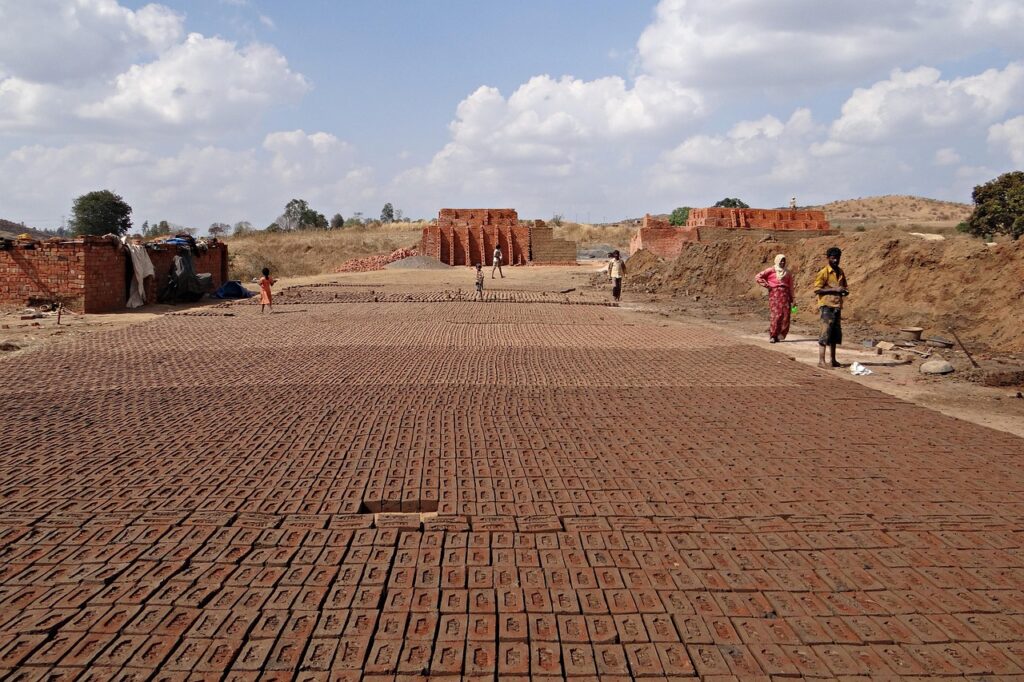
Red bricks are made from natural clay mixed with water and fired in kilns at very high temperatures. They have been used in Indian construction for centuries and are deeply embedded in traditional building practices.
Key Characteristics of Red Bricks
- High compressive strength
- Excellent durability and long lifespan
- High thermal mass (absorbs and releases heat slowly)
- Widely available across rural and urban India
- Familiar to most masons and contractors
What Are AAC Blocks?
AAC blocks are lightweight, precast concrete blocks manufactured using cement, lime, fly ash, water, and an expanding agent. The blocks are cured in an autoclave using steam under pressure, which creates millions of air pockets inside the material.
Key Characteristics of AAC Blocks
- 3–4 times lighter than red bricks
- Excellent thermal and sound insulation
- High fire resistance
- Smooth finish requiring less plaster
- Made using industrial waste (fly ash), making them eco-friendly
AAC Blocks vs Red Bricks: Detailed Comparison
| Parameter | AAC Blocks | Red Bricks |
|---|---|---|
| Weight | Very lightweight | Heavy |
| Construction Speed | Faster due to larger size | Slower |
| Structural Load | Lower load on foundation | Higher load |
| Thermal Insulation | Excellent | Moderate |
| Sound Insulation | High | Average |
| Mortar Usage | Less (thin joint mortar) | More cement mortar |
| Plaster Requirement | Minimal | Higher |
| Fire Resistance | Up to 4 hours | Good |
| Eco-Friendliness | High (uses fly ash) | Lower (topsoil depletion) |
| Initial Cost | Slightly higher | Lower |
| Long-Term Cost | Lower | Higher |
Step-by-Step Guide: How to Choose the Right Walling Material
Step 1: Assess Building Type & Height
- Multi-storey buildings → AAC blocks reduce dead load
- Single-storey homes → Both materials work well
Step 2: Check Soil & Seismic Conditions
- Seismic zones (earthquake-prone areas) → AAC blocks are safer due to lower weight
- Stable soil, low-rise structures → Red bricks are acceptable
Step 3: Consider Climate & Energy Efficiency
- Hot regions → AAC blocks keep interiors cooler
- Cold regions → AAC blocks retain indoor warmth
- Mild climates → Either option works
Step 4: Evaluate Budget (Short-Term vs Long-Term)
- Red bricks may seem cheaper initially
- AAC blocks reduce:
- Steel consumption
- Plaster cost
- Cooling and heating bills
- Construction time
Over the building’s lifespan, AAC blocks often turn out more economical.
Step 5: Availability of Skilled Labour
- AAC blocks require basic training but are easy to install
- In remote or rural areas, red brick labour may be easier to find
Which One Should You Choose?
Choose AAC Blocks If:
- You want faster construction
- You’re building a multi-storey or seismic-zone structure
- Energy efficiency and insulation matter to you
- You want an eco-friendly, modern building
- You want long-term cost savings
Choose Red Bricks If:
- You’re building in a rural or semi-rural area
- Red bricks are locally available at low cost
- You prefer traditional construction methods
- Skilled AAC block labour is not available nearby
Build Smarter with brichub.com
- AAC blocks use fly ash, a by-product of thermal power plants
- Red bricks consume topsoil, contributing to land degradation
- AAC blocks reduce carbon footprint and energy consumption
For environmentally conscious construction, AAC blocks are the clear winner.
Sustainability: AAC Blocks vs Red Bricks
There is no one-size-fits-all answer.
Both materials are reliable when used in the right context. The best choice depends on:
- Project location
- Building height
- Budget planning
- Climate conditions
- Long-term sustainability goals
AAC Blocks or Red Bricks?
At brichub.com, we help builders, contractors, and homeowners make data-backed construction decisions by offering:
- AAC blocks and red bricks from verified manufacturers
- Transparent pricing and logistics support
- Expert guidance for material selection
- One-stop access to quality building materials
Whether you choose AAC blocks or red bricks, brichub.com ensures you build stronger, smarter, and future-ready.
Check out the Roma book on GOOGLE PLAY here
Take a look at the Roma book on AMAZON here