





Quick Answer: Strong construction in 2026 comes down to five decisions made correctly, every time: the right cement grade for the application, BIS-certified TMT steel matched to structural drawings, properly graded sand with controlled silt content, clean, well-graded aggregates, :and disciplined waterproofing and curing. Everything else — brand, price, delivery speed — matters only after these fundamentals are locked in. This guide breaks down each material category with the IS codes, checks, and sourcing logic that experienced builders across India rely on, and shows how BrichHub’s pan-India hub-and-spoke delivery network makes getting it right easier than ever.
Introduction: Why Building in 2026 Demands Sharper Material Decisions
Construction in India has changed shape. Independent houses, G+2 and G+3 residential builds, gated communities, warehousing, and commercial developments are expanding into tier 2 and tier 3 cities as fast as they are in metros. At the same time, costs fluctuate weekly, supply chains shift with monsoon and festival cycles, and quality inconsistency at the material level can quietly undermine decades of structural performance.
At BricHub, we work at the intersection of this problem every day — supplying building materials and industrial raw materials to contractors, site engineers, developers, and institutional buyers across India with a network built for speed and consistency. Across hundreds of site interactions, one pattern holds: strong buildings are the outcome of informed material planning, not reactive buying.
This guide walks through the materials that define structural performance in 2026, the IS (Indian Standard) codes that govern them, what experienced builders check before approving a purchase order, and how a modern, technology-led supply partner changes the economics of getting materials right the first time.
Why Material Selection Matters More Than Ever in 2026
Direct answer: Material quality directly determines structural safety, lifecycle cost, and long-term maintenance burden. A cheaper material today can quietly cost multiples more in repair, retrofitting, and downtime later.
Three forces are converging in Indian construction right now:
- Tighter regulatory scrutiny — RERA compliance, structural audits, and BIS enforcement have made “informal” sourcing riskier for builders and developers alike.
- Rising client awareness — homeowners and institutional buyers increasingly ask for certification, test reports, and traceability before payment milestones.
- Volatile input costs — cement, steel, and sand prices shift with fuel costs, mining regulations, and seasonal demand, making planned procurement more valuable than ever.
Cutting corners on cement grade or steel certification may shave a small percentage off the initial bill. It almost never reduces total project cost once repair, retrofitting, and reputational damage are factored in.
Cement: The Structural Backbone of Concrete
Direct answer: Choose cement based on the application and the relevant IS code — not on price per bag alone. OPC 53 suits fast-track structural work; PPC suits plastering, masonry, and most residential slabs; PSC and SRC suit aggressive soil or marine exposure.
Understanding Cement Grades and IS Codes
Cement grade refers to the compressive strength achieved after 28 days of curing, measured in megapascals (MPa):
| Cement Type | IS Code | Strength Class | Best Suited For |
|---|---|---|---|
| OPC 33 | IS 269 | 33 MPa | Basic plaster/masonry (largely phased out) |
| OPC 43 | IS 8112 | 43 MPa | General residential structural work |
| OPC 53 | IS 12269 | 53 MPa | Columns, slabs, fast-track multi-storey builds |
| PPC (fly-ash blended) | IS 1489 (Part 1) | ~ equivalent to OPC 43 at 90 days | Plastering, masonry, most residential slabs, durability-focused work |
| PSC (slag blended) | IS 455 | Long-term high strength | Marine structures, high-sulfate soils, mass concrete |
| SRC (sulfate-resisting) | IS 12330 | Application-specific | Foundations in high-sulfate groundwater/soil |
At BrichHub, across the projects we supply, the most consistent structural results come from OPC 53 for columns and slabs where early strength and tight schedules matter, and PPC for plastering and masonry, where its slower strength gain reduces heat of hydration, improves workability, and cuts long-term cracking. Where soil or groundwater sulfate levels are elevated — common in parts of the NCR belt — PSC or SRC is the safer structural call, per IS 456 Table 2 guidance.
What Experienced Builders Check Before Accepting a Cement Delivery
- Manufacturing date — never older than 30–45 days; strength can drop meaningfully once cement crosses three months without re-testing
- ISI/BIS marking and batch consistency across the full delivery, not just the top bags
- Storage conditions — bags stacked on raised platforms, away from ground moisture, and fully covered
- Setting time — verified against IS code limits during site testing for large pours
- Curing period — IS 456 requires longer minimum curing for PPC/PSC (around 10 days) versus OPC (7 days); cutting curing short on blended cement causes a disproportionately larger strength loss
A Real Site Lesson on Storage
One project we supplied suffered hairline slab cracks not because the cement was defective, but because bags were exposed to ambient humidity before use. The material passed every quality check at dispatch — it was mishandled after delivery. Cement strength is only as reliable as the storage discipline on site.
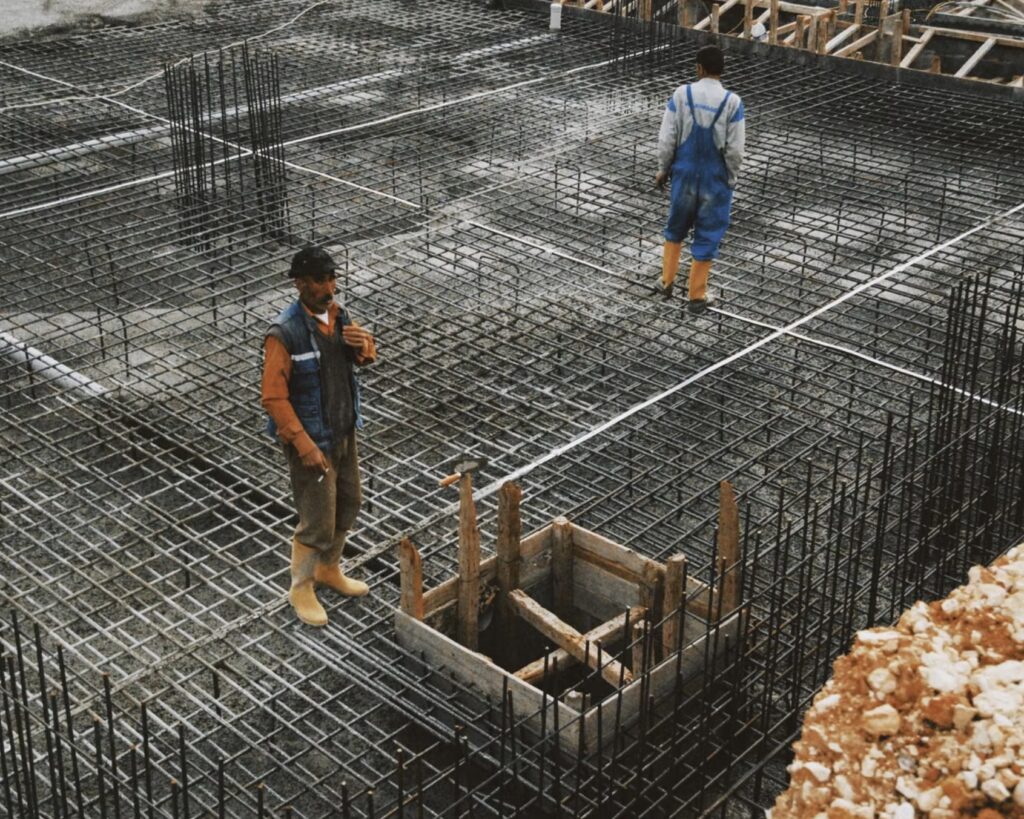
Steel (TMT Bars): The Core Reinforcement
Direct answer: For most residential and mid-rise projects, Fe500D offers the right balance of strength and ductility. Fe550D is reserved for high-load, high-rise, or infrastructure-grade structures where the structural engineer’s calculations specifically call for it.
Reading TMT Bar Grades Correctly
TMT (Thermo-Mechanically Treated) bars are governed by IS 1786:2008. The “Fe” denotes ferrous strength class, the number denotes minimum yield strength in N/mm², and the “D” suffix denotes enhanced ductility for better seismic and load-cycling performance.
| Grade | Min. Yield Strength | Typical Elongation | Best Suited For |
|---|---|---|---|
| Fe 415 | 415 N/mm² | ~14.5% | Light structures, low-rise, seismic-sensitive zones |
| Fe 500 | 500 N/mm² | ~12% | Standard RCC homes |
| Fe 500D | 500 N/mm² | ~16% | Most residential and commercial RCC — the current default |
| Fe 550 / Fe 550D | 550 N/mm² | ~14.5% (D grade) | High-rise, heavy industrial, warehouse and infrastructure work |
Steel selection should always be driven by the structural drawing, not by market chatter. Over-specifying steel doesn’t automatically add safety — it adds cost, and in some designs, congests reinforcement in a way that actually weakens concrete compaction around bars.
Site-Level TMT Verification Checklist
- Confirm the grade stamping is rolled into the bar itself, not just printed on the bundle tag
- Check rib pattern consistency across the batch — irregular ribs often signal inconsistent rolling
- Verify BIS/ISI certification and mill test certificates for the specific batch, not a generic brand certificate
- Inspect for rust pitting, bending damage, or oil contamination that can compromise bond strength with concrete
- For safety-critical or seismic-zone work, confirm the carbon equivalent (CE) value for weldability if site welding is planned
Contractors across India often compare TMT rates weekly — and that’s reasonable given how much steel moves a budget. But an experienced supplier will tell you: grade verification matters more than rate fluctuation. A marginally cheaper bar that fails a bend test costs far more than the saving.
Sand: The Often Underrated Contributor
Direct answer: Controlled, IS 383:2016-compliant M-Sand is now the more consistent and, in most regions, the more compliant option compared to unverified river sand — largely because of tighter silt content control and reduced dependence on increasingly restricted river mining.
M-Sand vs River Sand: What Actually Matters
Many structural strength issues trace back not to cement or steel, but to poorly graded sand.
- M-Sand (Manufactured Sand): produced by crushing hard rock and controlling particle shape via VSI crushing. Under IS 383:2016, quality M-Sand carries low silt content and angular particles that improve mechanical bonding with cement paste.
- River sand: naturally rounded particles give excellent workability for plastering, but quality varies enormously by source, and mining restrictions in several states have made consistent, legally sourced river sand harder to guarantee.
High silt content is the real danger regardless of source — IS 383 sets clear silt limits by grading zone, and silt above those limits can measurably reduce concrete’s compressive strength by weakening the cement-aggregate bond.
Site-Level Sand Checks
- Hand-rub test: rub sand between your palms — excessive clay or silt leaves a visible residue and a gritty, muddy feel
- Silt jar test: fill a glass with roughly 50mm of sand, top up with water to 150mm, shake, and let it settle for an hour — a distinct muddy top layer beyond IS-permitted limits signals a rejection
- Salt test: taste a pinch mixed with water — any saltiness signals sea sand, which is corrosive to reinforcement and must never be used in RCC
- Grading check: confirm the correct zone/grading for the application — plastering sand and RCC sand are not interchangeable
Better sand reduces cement consumption per batch and improves concrete bonding — a direct, measurable cost saving over the life of a project, not just a quality checkbox.
Aggregates: The Load Distributors
Direct answer: Use clean, well-graded 20mm coarse aggregate for most slab and beam work, with 10mm aggregate reserved for congested reinforcement zones and thin sections.
Aggregates provide the bulk of concrete’s compressive strength. Poor grading or dusty, uncleaned aggregate increases voids in the concrete matrix, weakening overall density and long-term durability.
Site checks:
- Sharp-edged, properly crushed stone rather than rounded or weathered material
- No clay lumps or organic contamination
- Uniform size distribution matching the IS 383 grading zone for the mix design
- Clean, covered storage that prevents contamination between deliveries
Aggregates can seem like the least glamorous item on a purchase order, but they determine how efficiently concrete distributes load across every structural element above the foundation.
Bricks & Blocks: Choosing the Right Wall System
Direct answer: AAC (Autoclaved Aerated Concrete) blocks and fly-ash bricks are increasingly the default for 2026 builds due to faster construction speed, better thermal insulation, and lower dead load — but traditional red clay bricks still hold their place where load-bearing masonry or specific regional practices demand it.
| Option | Strengths | Trade-offs |
|---|---|---|
| Red clay bricks | Time-tested, high compressive strength, good for load-bearing walls | Higher dead load, more mortar consumption, environmental cost of firing |
| Fly-ash bricks | Uses industrial by-product, uniform size, lower water absorption | Quality varies significantly by manufacturer |
| AAC blocks | Lightweight, faster laying, superior thermal & sound insulation, reduces structural load | Requires specific block-jointing mortar and skilled masonry |
| Concrete solid/hollow blocks | High strength, good for boundary walls and industrial structures | Heavier, less thermal efficiency than AAC |
Wall system choice affects far more than the masonry line item — it changes structural load calculations, cement/sand consumption for plastering, and the building’s thermal performance for years after handover.
Concrete Mix & Ready-Mix Decision
Direct answer: Use Ready-Mix Concrete (RMC) for slabs and structural pours where batching consistency and speed are priorities. For smaller residential builds, on-site mixing can perform equally well — provided mix ratios and water-cement ratio are strictly monitored.
Manual site mixing depends heavily on labor discipline and consistent batching, which is difficult to guarantee across a full working day. RMC improves batching accuracy, reduces aggregate segregation, and speeds up large pours considerably.
That said, RMC isn’t automatically “better” for every project — logistics, minimum order quantities, and site access all factor into the decision. The best mix is the one that’s monitored properly, not necessarily the one that’s technologically advanced.
Waterproofing & Chemical Admixtures
Direct answer: Water infiltration is the single most common cause of long-term structural deterioration in Indian buildings — investing in waterproofing at the design and construction stage is dramatically cheaper than remedial work after handover.
Waterproofing compounds and chemical admixtures improve resistance to moisture penetration, reduce shrinkage cracking, and — in the case of corrosion inhibitors — actively protect embedded reinforcement.
Priority zones that demand extra attention:
- Basements and retaining walls (hydrostatic pressure)
- Terraces and roof slabs (standing water, thermal cycling)
- Water tanks and sumps (constant saturation)
- Bathroom and kitchen wet areas (localized but persistent leakage risk)
Skipping waterproofing to trim budget is one of the most common false economies in Indian construction — it nearly always resurfaces as expensive remedial work within a few monsoon cycles.
Plywood, Shuttering & Formwork Materials
Direct answer: Formwork quality directly affects the surface finish, dimensional accuracy, and curing conditions of every concrete element it shapes — treating it as a “reusable, low-priority” item is a common and costly mistake.
- Shuttering plywood (film-faced): should be selected for water resistance and repeated-use durability, especially on multi-pour projects
- Steel/aluminium formwork systems: increasingly used on larger residential and commercial projects for dimensional precision and faster deshuttering cycles
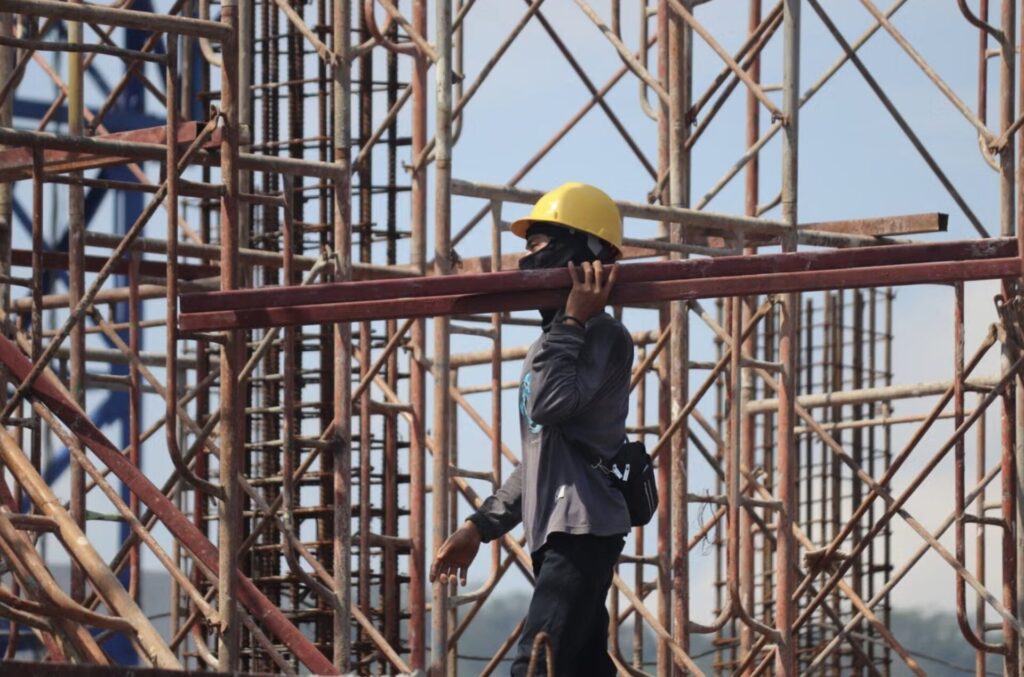
- Support systems (props, scaffolding): must be rated and inspected for load capacity — undersized or worn props are a recurring site safety issue
Formwork that’s warped, delaminated, or inconsistently oiled produces surface defects and honeycombing in concrete that no amount of finishing work can fully hide.
Electrical & Plumbing Materials
Direct answer: Structural strength today also means resilience against fire and water damage — MCB quality, wiring standards, and pipe placement must be finalized before slab pouring, not adjusted afterward.
Poor coordination between structural and MEP (mechanical, electrical, plumbing) planning is one of the most common causes of post-construction rework — drilling into cured RCC to fix conduit routing weakens the very elements it’s meant to serve.
- Electrical: MCB ratings, conduit placement, and wiring gauge should be finalized against load calculations before casting
- Plumbing: pipes should be pressure-tested before casting — small leaks embedded inside a slab create slow, invisible corrosion of reinforcement over years
- Material authenticity: counterfeit or under-rated electrical components are a genuine fire-safety risk, not just a quality issue
At BrichHub, we supply verified, authentic electrical and plumbing materials specifically because this category protects both human safety and the reinforcement embedded around it.
Paints, Tiles & Finishing Materials
Direct answer: Finishing materials are the most visible part of a project but the least forgiving of shortcuts in substrate preparation — most paint and tile failures trace back to inadequate curing or surface prep, not the finish product itself.
- Paints: exterior paint systems should be matched to the local climate — waterproof exterior emulsions for high-rainfall regions, breathable formulations over freshly cured plaster
- Tiles: verify water absorption rating for the application (bathrooms and exteriors need low-absorption, frost/slip-rated tiles); confirm batch consistency to avoid shade variation across a floor
- Adhesives and grouts: cheap tile adhesive is one of the most common causes of hollow-sounding, popping tiles within the first two years
Finishing materials get the most client attention — and ironically the least material scrutiny. That imbalance is worth correcting.
Sustainable & Smart Material Trends in 2026
India’s builders are increasingly evaluating materials that reduce environmental impact without compromising performance:
- Fly-ash and slag-blended cements (PPC/PSC) — lower embodied carbon, often better long-term durability
- AAC blocks — reduced dead load, lower energy demand for heating/cooling over the building’s life
- Recycled aggregates — increasingly viable for non-structural work like pathways, boundary walls, and backfill
- Engineered M-Sand — reduces dependence on river mining while meeting IS 383 quality benchmarks
- Water-saving curing methods — curing compounds and covered curing that reduce water consumption on site
Sustainability in 2026 doesn’t mean compromise. Several of these materials now match or outperform traditional alternatives on pure engineering merit — the eco-benefit is a bonus, not a trade-off.
Cost Control: Smart Procurement, Not Just Cheap Sourcing
Direct answer: The biggest cost lever in construction materials isn’t unit price — it’s demand planning, bulk consolidation, and eliminating both stockouts and over-ordering.
Real material cost control comes from:
- Consolidated ordering across cement, steel, sand, and aggregates to unlock bulk pricing without overstocking any single item
- Phased delivery aligned to the construction schedule, so capital isn’t tied up in materials sitting idle on site
- Verified vendor relationships that reduce the hidden cost of rejected or substandard deliveries
- Transparent, itemized invoicing that makes budgeting and reconciliation predictable across a multi-month build
This is precisely the gap a modern, technology-led B2B material partner is built to close — replacing fragmented, phone-call-driven procurement with structured, trackable ordering.
Seasonal Buying: Planning Around India’s Construction Calendar
Direct answer: Sand, aggregate, and labor availability in India move with the monsoon and festival calendar far more than most procurement plans account for.
- Pre-monsoon (March–May): peak demand window for structural materials as contractors race to complete slab work before rains — plan cement and steel deliveries early
- Monsoon (June–September): sand supply tightens and quality risk rises (higher moisture, silt disturbance); waterproofing material demand peaks
- Festive season (October–November): labor availability drops sharply across most regions, even as material demand often stays steady
- Post-festive/winter (December–February): typically the most stable window for large-volume procurement and finishing-stage materials
Builders who plan procurement against this calendar — rather than reacting to it — consistently avoid the price spikes and quality compromises that hit last-minute buyers hardest.
The Construction Materials Checklist
A professional, phase-wise checklist typically includes:
Structural phase
- Cement (structural grade — OPC 53/PSC as applicable)
- TMT bars (grade per structural drawing) and binding wire
- Sand (RCC-grade, IS 383 compliant)
- Coarse aggregates (20mm/10mm as per element)
- Shuttering plywood and formwork/props
Rough-in phase
- Electrical conduits, wiring, and MCB units
- Plumbing pipes and fittings (pressure-tested)
- Waterproofing chemicals and membranes
Finishing phase
- Plaster-grade cement (PPC)
- Bricks/blocks for internal partitions
- Tiles, adhesives, and grout
- Paints and primers
Structured, phase-wise planning reduces last-minute procurement risk and prevents the two most common site delays: waiting on materials, and paying rush premiums when they were ordered too late.
India’s Market Realities — and Why Pan-India Delivery Changes the Equation
Contractors across India deal with fluctuating logistics, seasonal demand spikes, and regional supply gaps that a single local vendor often can’t absorb. Monsoon season disrupts sand supply. Festive seasons squeeze labor availability. A shortage in one city doesn’t always mean a shortage in the next — but most builders have no visibility into that.
This is where a pan-India network – BricHub changes the economics of a project: A knowledgeable supply partner doesn’t just deliver material — they help contractors and developers anticipate market shifts before those shifts show up as budget overruns.
Real-World Site Mistake: When “Saving Steel” Backfires
On a G+1 residential build, reinforcement spacing was quietly adjusted by workers on site to “save steel” — without consulting the structural drawing. Six months later, visible slab sagging required expensive reinforcement retrofitting, at a cost far beyond whatever steel was “saved.”
The lesson: material savings without engineering validation don’t reduce cost — they defer it, with interest, into a structural liability.
Contractor Insight: 20 Years of Site Experience, Distilled
Across two decades of Indian construction sites, the strongest projects consistently share four traits — not budget size:
- Material inspection happens before unloading, not after a problem shows up
- Structural drawings are respected, even when a shortcut looks tempting
- Mix ratios are monitored on every pour, not just the first one
- Curing discipline is consistent, especially for blended cements
Consistency beats shortcuts. Every time.
How BricHub Fits Into This
BricHub exists because Indian construction procurement has been fragmented for too long — phone-call ordering, inconsistent quality checks, and no visibility into where materials are actually coming from. Providing verified materials, transparent pricing, and delivery timelines that match real construction schedules, not vendor convenience.
Whether you’re sourcing a single load of PPC cement for a plastering job or setting up structured monthly supply for a multi-site build, the underlying principle doesn’t change: the right material, correctly specified, delivered on schedule, beats the cheapest material every time.
Final Thoughts
Construction materials in 2026 require balanced, informed decision-making. Cement must match its application and IS code. Steel grade must align with load calculations, not market trends. Sand and aggregates must be clean, properly graded, and silt-tested. Waterproofing and MEP coordination must happen before — not after — the slab is poured.
India’s construction growth makes this discipline more critical every year, not less. Builders who prioritize inspection, certification, and coordination consistently outperform those chasing short-term price advantages — and a pan-India, technology-led supply partner makes that discipline easier to maintain at scale.
Strong buildings are built long before the slab is poured — they’re built the moment materials are selected intelligently.
Frequently Asked Questions
1. Which cement is best for house construction in 2026? OPC 53 grade is ideal for structural elements like columns and slabs where early strength matters. PPC performs better for masonry and plastering due to lower heat of hydration and better long-term durability.
2. Is Fe500D better than Fe550D for residential homes? Fe500D is typically sufficient for standard homes, small apartments, and mid-rise buildings. Fe550D is used only when the structural design specifically calls for higher yield strength, usually in high-rise or heavy-load structures.
3. Why is M-Sand preferred over river sand in 2026? M-Sand offers controlled particle grading and consistently low silt content under IS 383:2016, plus reduced dependence on increasingly restricted river sand mining. Well-processed M-Sand often matches or outperforms river sand for concrete strength.
4. How do I verify TMT bar quality on site? Check the rolled-in grade stamping, request BIS certification and mill test certificates for the specific batch, inspect rib pattern consistency, and check for rust pitting or bending damage before acceptance.
5. What materials are essential before slab casting? Steel reinforcement and binding wire, structural-grade cement, RCC-grade sand, coarse aggregates, electrical conduits, pressure-tested plumbing sleeves, and waterproofing compounds for exposed edges.
6. How can I reduce long-term maintenance costs on a build? Focus on certified, IS-code-compliant materials, disciplined curing (especially for blended cements), proactive waterproofing at design stage, and consistent supervision during every structural pour.
7. What’s the real difference between AAC blocks and red clay bricks? AAC blocks are lighter, faster to lay, and offer better thermal insulation, which reduces both structural load and long-term cooling costs. Red clay bricks remain a strong, time-tested choice for load-bearing masonry where regional practice favors them.
8. Is Ready-Mix Concrete (RMC) always better than site-mixed concrete? Not always. RMC improves batching consistency and speed for large structural pours, but well-supervised on-site mixing performs equally well for smaller residential builds, provided mix ratios are strictly controlled.
9. How does BrichHub help contractors manage material procurement across multiple sites? Through transparent invoicing built around real project cash flow, with pan-India expansion underway.
10. What’s the biggest hidden cost in construction material procurement? Reactive, last-minute buying — it forces rush premiums, limits quality verification time, and increases the risk of accepting substandard deliveries just to keep a site moving. Planned, phase-wise procurement consistently costs less over a full project.
This guide reflects current IS code standards and site-level best practices as of 2026. Material rates and regional regulations vary — always verify current pricing and compliance documentation with your supplier before bulk procurement.
Build once. Build right. Start from brichub.com
Check out the Roma book on GOOGLE PLAY here
Take a look at the Roma book on AMAZON here