



Introduction: India’s Supply Chain Opportunity Is Growing
India’s ambition to become a global manufacturing, logistics and business hub is creating new opportunities for businesses across industries. From infrastructure development and manufacturing to e-commerce, warehousing and construction, companies are increasingly dependent on efficient supply chains to remain competitive.
Infrastructure investment, digitalisation and improvements in logistics are helping businesses connect with new markets. According to the Government of India, the country ranked 38th out of 139 economies in the World Bank’s Logistics Performance Index 2023, improving from 54th in 2014. This progress reflects India’s growing logistics capabilities, although challenges around costs, reliability and last-mile delivery remain.
However, better infrastructure alone cannot guarantee business growth. Companies also need sufficient working capital, reliable suppliers, predictable payment cycles and effective financial management.
For Indian micro, small and medium enterprises (MSMEs), these challenges can be particularly significant. A business may have confirmed orders and strong demand but still struggle to pay suppliers, purchase inventory or expand operations because its money is tied up in outstanding invoices.
This is where Supply Chain Finance (SCF) becomes an important part of India’s evolving business ecosystem.
For businesses operating in construction materials, building supplies, distribution and logistics, platforms such as BricHub.com represent the broader shift towards more organised, technology-enabled procurement and supply chain management.
1. What Is Supply Chain Finance (SCF)?
Supply Chain Finance refers to financial arrangements that help businesses manage the gap between supplying goods or services and receiving payment.
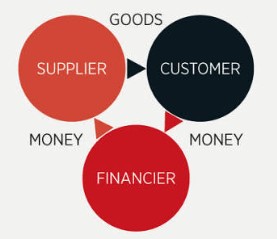
These arrangements generally involve three parties:
- Buyers: Businesses purchasing goods or services.
- Suppliers: Businesses providing those goods or services.
- Financiers: Banks, NBFCs and other eligible financial institutions that may provide funding against eligible receivables or transactions.
For example, a construction material supplier delivers cement, steel or electrical supplies to a contractor or developer on agreed credit terms. The supplier may have to wait several weeks for payment, even though it needs cash immediately to replenish stock and pay its own vendors.
A suitable supply chain finance arrangement may allow the supplier to receive payment earlier through an eligible financier, subject to approval, fees and the terms of the facility.
The buyer benefits from an organised procurement and payment process, while the supplier may improve cash flow and reduce the pressure created by delayed collections.
Importantly, supply chain finance is not the same as a conventional business loan. Depending on the arrangement, financing may be linked to invoices, confirmed receivables, purchase orders or the creditworthiness of a buyer.
2. Why Supply Chain Finance Matters for Indian MSMEs
MSMEs are an essential part of India’s manufacturing, distribution, infrastructure and services ecosystem. Yet many smaller businesses face a persistent challenge: revenue on paper does not always translate into cash in the bank.
Consider a construction materials distributor that supplies ₹20 lakh worth of products to several contractors during a month. If customers pay after 45 days, the distributor may need substantial working capital to replenish inventory while continuing to fulfil new orders.
Without adequate liquidity, the business may face difficulties in maintaining stock, negotiating favourable supplier prices or accepting larger orders.
Supply chain finance can help address some of these challenges when suitable financing is available.
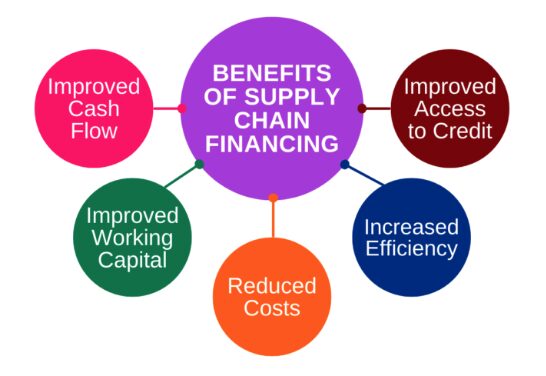
Key benefits of supply chain finance
1. Improved working capital
Eligible suppliers may access funds against approved invoices instead of waiting until the full payment term expires.
2. Better inventory management
More predictable cash flow can help businesses replenish fast-moving products and reduce stock shortages.
3. Greater capacity to fulfil orders
Businesses with access to appropriate working capital may be better positioned to serve additional customers and larger projects.
4. Stronger supplier relationships
Timely payments to upstream vendors can improve trust, strengthen commercial relationships and support more reliable deliveries.
5. Reduced dependence on informal borrowing
Where affordable and suitable financing is available, businesses may rely less on expensive short-term borrowing. The actual benefit depends on the financing cost and the business’s existing alternatives.
6. Improved financial visibility
Digital invoices, documented purchase orders and organised receivables records can help businesses understand where cash is tied up and plan future expenditure.
3. India’s Policy and Digital Infrastructure for Supply Chain Finance
India has introduced several mechanisms that support MSME formalisation, trade documentation and access to finance.
The MSMED Act and delayed payments
Under Section 15 of the Micro, Small and Medium Enterprises Development Act, 2006, payments due to eligible micro and small enterprise suppliers must be made within the agreed period, which cannot exceed 45 days from acceptance or deemed acceptance of goods or services. The Act also provides a framework for addressing delayed payments.
Eligible micro and small enterprises can use the MSME Samadhaan mechanism to submit delayed-payment cases to the relevant Micro and Small Enterprises Facilitation Council.
Trade Receivables Discounting System (TReDS)
The Reserve Bank of India introduced the regulatory framework for TReDS, an electronic platform through which eligible MSME trade receivables can be financed by participating financiers.
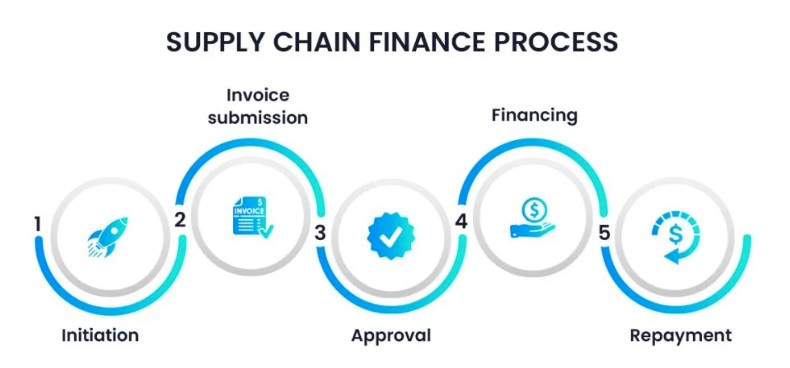
Broadly, a seller raises an invoice against a buyer, the invoice is accepted or confirmed through the applicable process, and financiers may bid to discount the receivable. The supplier receives funds after the applicable discount, while the buyer pays the financier on the due date.
Eligibility, buyer participation, documentation and platform rules apply. TReDS is a financing mechanism, not a guarantee that every invoice will be funded.
These developments are particularly relevant to businesses that sell to larger corporates, public-sector organisations and established buyers.
4. The Working Capital Challenge in Construction and Building Materials
The construction sector presents a particularly useful example of why supply chain efficiency and financial discipline matter.
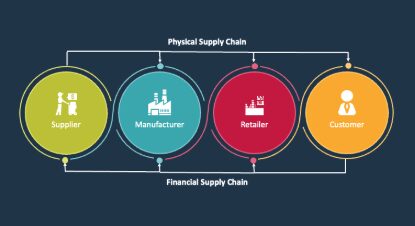
A typical construction materials supply chain may include manufacturers, stockists, distributors, retailers, transporters, contractors, subcontractors and property developers.
Each participant depends on the others for timely deliveries and payments.
For example:
- A contractor receives an order for a residential construction project.
- The contractor purchases cement, steel, sand, aggregates and plumbing supplies.
- The supplier delivers the materials to the site.
- Payment is made according to the agreed credit terms.
- The supplier must continue purchasing inventory to fulfil other orders while waiting for payment.
If the contractor’s payment is delayed, the supplier may face a cash shortage even when demand remains strong.
This creates a chain reaction: suppliers delay replenishment, contractors experience material shortages, and construction schedules may be affected.
For businesses in this sector, managing working capital requires more than access to loans. It also requires accurate orders, transparent pricing, reliable delivery schedules, proper documentation and disciplined collections.
How digital procurement can help
A structured digital procurement process can help construction businesses:
- Compare prices and suppliers before placing orders.
- Maintain a clear record of quantities, specifications and delivery requirements.
- Reduce communication gaps between contractors and vendors.
- Track purchases and improve expense visibility.
- Organise transaction records that may support future credit assessments.
BriCHub.com can be positioned within this wider opportunity by helping construction stakeholders approach building-material procurement in a more organised and transparent manner.
Procurement technology and financing are complementary, but they are not interchangeable: access to financing depends on the actual products, partnerships and eligibility criteria offered by a lender or platform.
5. How Businesses Can Prepare for Better Supply Chain Finance
Businesses do not need to wait for a financing requirement to begin improving their financial readiness. The following steps can help establish a stronger foundation.
Step 1: Formalise business documentation
Maintain up-to-date business registration records, PAN details, applicable GST registration, bank account information and Udyam Registration where eligible.
Ensure that the legal name, tax details and bank information are consistent across invoices, purchase orders and contracts.
Step 2: Organise invoices and receivables
Maintain a central record of invoices raised, payment due dates, outstanding balances, buyer confirmations and overdue amounts.
A simple receivables ageing report can help identify which customers are paying on time and where working capital is getting stuck.
Step 3: Strengthen buyer and supplier relationships
Use written purchase orders, delivery challans, invoices and clearly defined payment terms.
Where possible, agree on processes for confirming deliveries, resolving disputes and approving invoices quickly. Disputed or undocumented transactions can complicate financing applications.
Step 4: Explore suitable financing options
Depending on the business’s needs and eligibility, possible options may include:
- Invoice discounting or receivables financing.
- TReDS through an authorised platform.
- Working capital facilities from banks or eligible NBFCs.
- Cash-credit or overdraft facilities.
- Purchase-order or supply chain financing where offered by a lender.
Compare the effective annualised cost, processing charges, recourse provisions, repayment obligations and consequences of delayed payment before accepting a facility.
Step 5: Assess cash flow before borrowing
Estimate the amount required, how long the funds will be needed and the expected source of repayment.
Financing should solve a genuine timing or growth requirement rather than conceal persistent operating losses or unprofitable credit terms.
Step 6: Use digital tools to improve procurement visibility
Track material purchases, supplier prices, delivery status and outstanding payments in a consistent system.
For construction businesses, this can help align procurement with project schedules and reduce unnecessary inventory accumulation.
Step 7: Review performance regularly
Monitor metrics such as:
- Days Sales Outstanding (DSO).
- Inventory holding days.
- Days Payable Outstanding (DPO).
- Operating cash flow.
- Cost of financing.
- Overdue receivables.
- Order fulfilment and delivery performance.
Reviewing these indicators monthly can help businesses identify working capital problems before they become urgent.
6. Documents Commonly Required for Supply Chain Finance in India
Documentation varies by lender, financing product and transaction structure. Businesses may commonly be asked to provide the following:
| Document | Why it may be required |
|---|---|
| Business registration documents | To verify the legal entity |
| PAN and applicable GST records | To establish tax and identity details |
| Udyam Registration | To verify MSME status where relevant |
| Bank statements | To assess transaction history and cash flow |
| Financial statements and income-tax returns | To evaluate financial performance |
| Purchase orders and supply contracts | To establish the commercial relationship |
| Tax invoices and delivery records | To verify the underlying transaction |
| Buyer acceptance or invoice confirmation | To establish receivable validity where required |
| Existing loan and credit details | To assess outstanding obligations |
A lender may request additional information, collateral, guarantees or other security depending on the facility. Not every financing product is collateral-free, and approval is never automatic.

7. Common Supply Chain Finance Mistakes Businesses Should Avoid
Even a suitable financing facility can become expensive if the underlying business processes are weak.
Financing every invoice without checking margins: A business should assess whether the cost of financing leaves enough profit on the transaction.
Ignoring overdue receivables: Repeated delays from customers can create a structural cash-flow problem that short-term borrowing alone will not resolve.
Accepting unclear repayment terms: Businesses should understand whether the facility is with recourse or without recourse, when repayment is due and who bears the risk if the buyer defaults.
Relying on a single customer: Heavy dependence on one buyer can expose a supplier to significant risk if that customer’s orders decline or payments are delayed.
Maintaining incomplete records: Missing invoices, disputed delivery records or inconsistent tax details can slow assessments and complicate financing.
Borrowing without a repayment plan: Financing should be supported by realistic projections of collections, operating expenses and repayment capacity.
8. How BricHub.com Fits into India’s Evolving Construction Supply Chain
India’s construction and infrastructure ecosystem requires reliable access to building materials, efficient procurement and coordination among contractors, suppliers and other industry participants.
As businesses scale, fragmented purchasing processes and limited visibility into orders can make it harder to control costs and manage cash flow.
BricHub.com can address this broader challenge by helping construction stakeholders make their procurement processes more organised, improve access to building-material information and plan purchasing requirements more effectively, in line with the services available on the platform.
For contractors and suppliers, the wider opportunity is to combine better procurement practices with sound financial management.
For example, a contractor that maintains clear project-wise material requirements, purchase orders and payment records is better placed to forecast expenditure. A supplier with organised invoices and documented customer transactions is better prepared to approach eligible banks or financiers when funding is needed.
The goal is not simply to obtain more credit. It is to make every rupee of working capital work more efficiently.
Businesses should verify the availability, terms and eligibility criteria of any specific procurement or financing service directly with the relevant provider.
Conclusion: Building Stronger Supply Chains Through Better Finance and Procurement
India’s growing role in global manufacturing, logistics and infrastructure creates opportunities for businesses that can deliver reliably, manage costs and maintain healthy cash flow.
Supply chain finance can help eligible MSMEs unlock funds tied up in receivables, manage working capital and support growth. Government-backed legal frameworks and mechanisms such as TReDS provide additional avenues for eligible businesses to explore.
However, finance alone cannot create a resilient supply chain. Sustainable growth also depends on reliable suppliers, accurate documentation, disciplined collections, transparent transactions and effective procurement planning.
For India’s construction-material ecosystem, these priorities are especially important. Contractors, distributors and suppliers that combine financial discipline with organised procurement practices will be better prepared to serve growing demand.
At BricHub.com, the broader vision is to support a more organised and efficient construction-material ecosystem, where better procurement decisions and stronger operational practices help businesses grow with greater confidence.
As India’s supply chains evolve, the businesses that prepare early, understand their cash flow and build reliable commercial relationships will be better positioned to capture the opportunities ahead.
Frequently Asked Questions (FAQs)
1. What is supply chain finance in India?
Supply chain finance is a group of financing arrangements that help buyers and suppliers manage payment cycles and working capital. Examples include invoice discounting, receivables financing and eligible transactions through TReDS.
2. Can small businesses use supply chain finance?
Yes, eligible MSMEs may access suitable financing products through banks, NBFCs, authorised TReDS platforms and other providers, subject to their eligibility criteria and approval processes.
3. What is TReDS in India?
TReDS is an RBI-regulated electronic system designed to facilitate financing of eligible MSME trade receivables through participating financiers.
4. What documents are required for invoice financing?
Common documents include business registration records, PAN, applicable GST details, bank statements, invoices, purchase orders, supply contracts and buyer confirmations. Exact requirements vary by lender.
5. Is supply chain finance the same as a business loan?
No. Supply chain finance often relies on an underlying trade transaction or receivable, while a conventional business loan may be based on the borrower’s credit profile, cash flow, security and other lending criteria.
6. How can construction businesses improve working capital?
They can improve invoice tracking, negotiate clear payment terms, monitor inventory, plan purchases against project schedules, follow up on overdue receivables and assess appropriate financing options.
7. How can BriCHub.com support construction businesses?
BriCHub.com is relevant to the broader construction-material procurement ecosystem. Businesses should consult the platform directly to confirm its current services and available features.
Disclaimer: This article is for general informational purposes and does not constitute financial, legal or investment advice. Financing availability, costs, eligibility and terms depend on the relevant lender, platform and transaction. Verify current requirements with official sources and qualified advisers before making decisions.
Build once. Build right. Start from brichub.com
Check out the Roma book on GOOGLE PLAY here
Take a look at the Roma book on AMAZON here
Leave a Reply